Hank™ — RiseMove’s AI movement coach
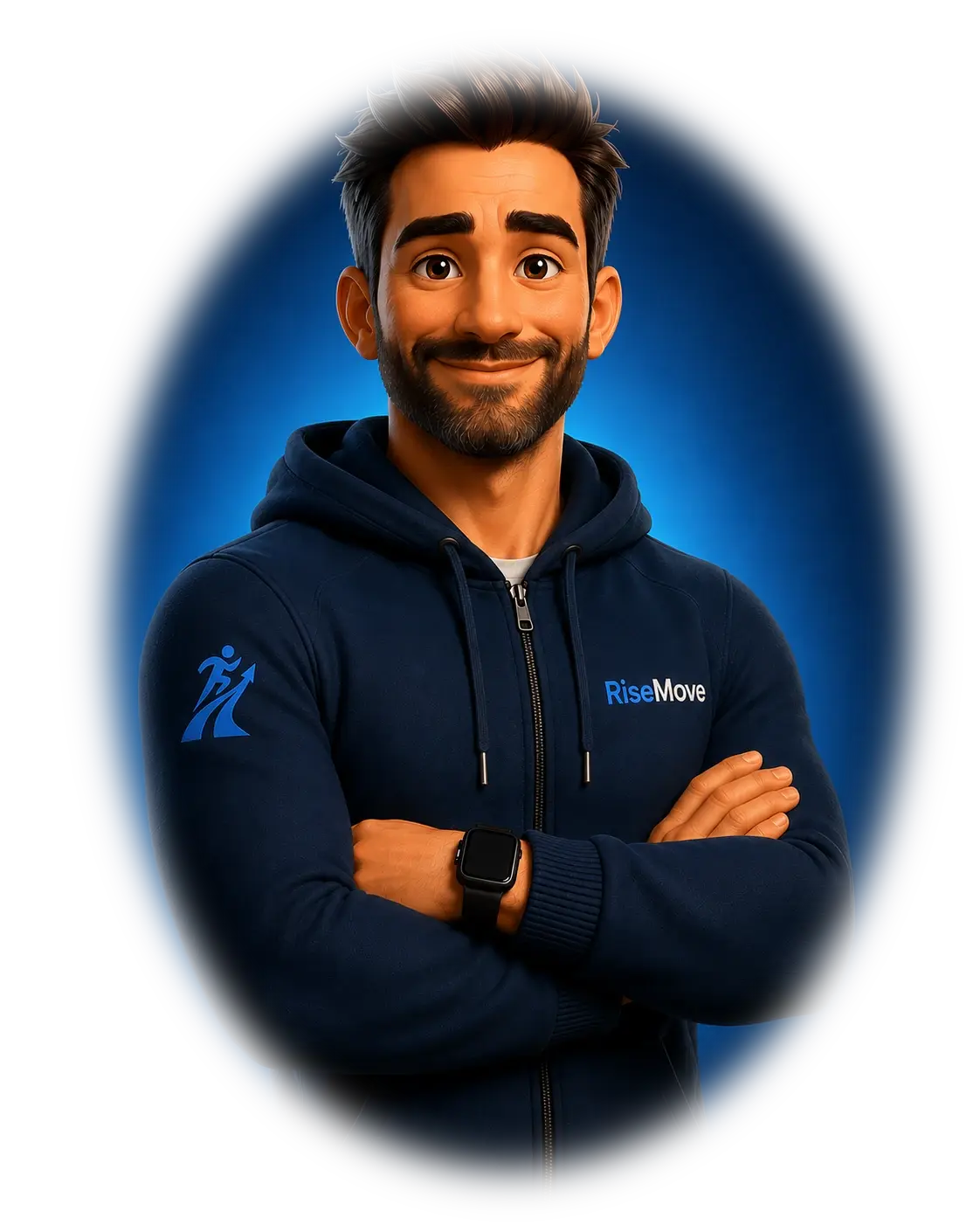
Meet Hank™, your RiseMove AI movement coach.
AI when you want the why.
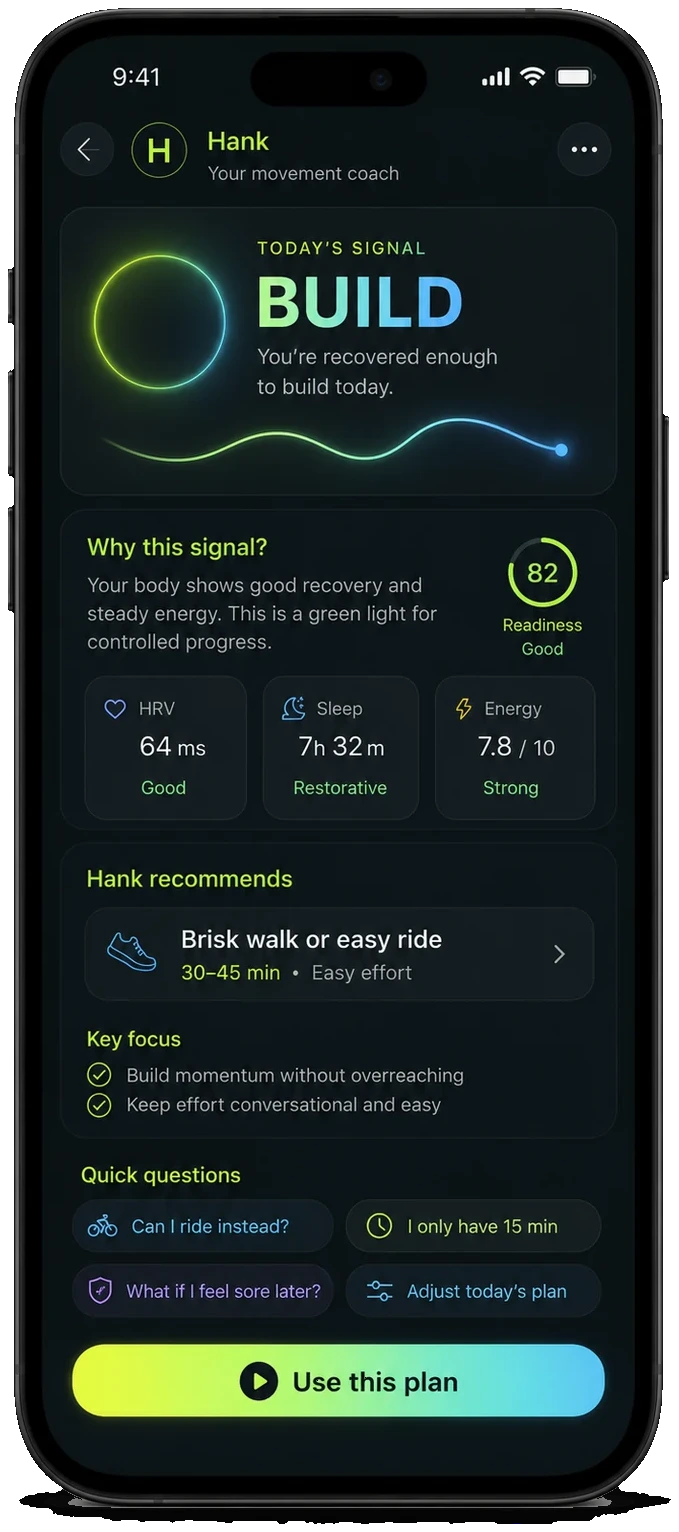
Your Daily Signal comes first. Hank explains why it fits and helps you decide what to do next.
Start with today’s Daily Signal.
Hank is designed to clarify the call RiseMove already made, not make you start from a blank chat.
Your RiseMove context comes with the conversation.
When available and authorized, Hank can use your current Daily Signal and reason, today’s check-in, recent movement, connected activity, preferences, goals, and supported weekly-plan context.
More context can make the explanation more relevant. It does not make Hank a medical authority.
Decision support, not medical advice.
Hank does not diagnose, prescribe treatment, clear you for exercise, replace emergency care, or override professional restrictions. It cannot observe your technique in person or know information you have not provided.
Your context is used to answer the question at hand.
RiseMove may send relevant conversation and product context to the OpenAI API. Hank does not receive a wholesale copy of your Apple Health or Health Connect records. RiseMove states that Hank conversations are not sold or used for advertising.
A few things people ask.
Is Hank the same as ChatGPT?
Hank™ is RiseMove’s AI movement coach, built around the Daily Signal and what RiseMove knows about your recent movement.
Can Hank diagnose an injury or illness?
No. Hank and RiseMove do not diagnose, treat, or determine whether exercise is medically safe.
Does RiseMove replace a personal trainer?
No. A human coach can observe technique, build individualized programs, and provide accountability beyond the app.
Does OpenAI train models on Hank conversations?
RiseMove uses the OpenAI API for Hank and states conversations are not used for advertising. OpenAI says API data is not used to train models by default unless the customer opts in.