
Start before hunger
Start before hunger and thirst. Use tolerated foods and drinks on a simple schedule that still works when pace, weather, or the group gets distracting.
Practice the range Hank suggested
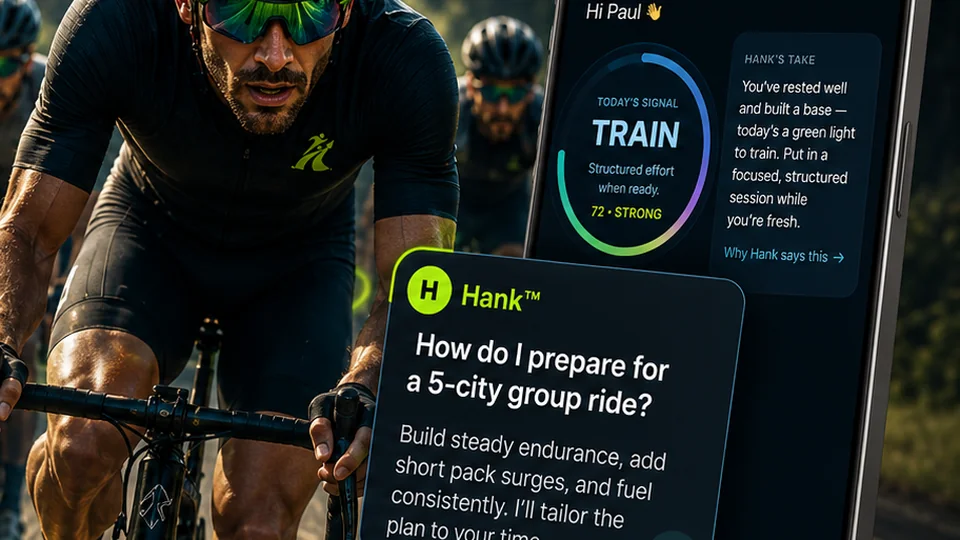
In the five-city tour example, Hank™ suggested 30–60 g carbohydrate per hour plus regular fluids. Needs vary, so treat that as a practice range, not a universal prescription.
Do not wait until event day to learn whether your stomach, bottles, packaging, and timing work together.
Build an operational routine
- Choose an hourly target and break it into repeatable eating points.
- Know where food is and whether you can open it safely.
- Plan fluids separately when needed.
- Test the plan on rides long enough to expose mistakes.
- Adjust for heat, pace, and available stops.
Review the ride, not only the watts
After long rides, review energy, stomach comfort, concentration, late pacing, and recovery. Those outcomes tell you whether fueling worked.
Put the fueling plan inside the ride you can handle today
RiseMove can help you decide whether today is a day to Train, Build, Move, Recover, or Restore. If the day supports a longer ride, Hank™ can help you think through how that ride fits the rest of the week.